-
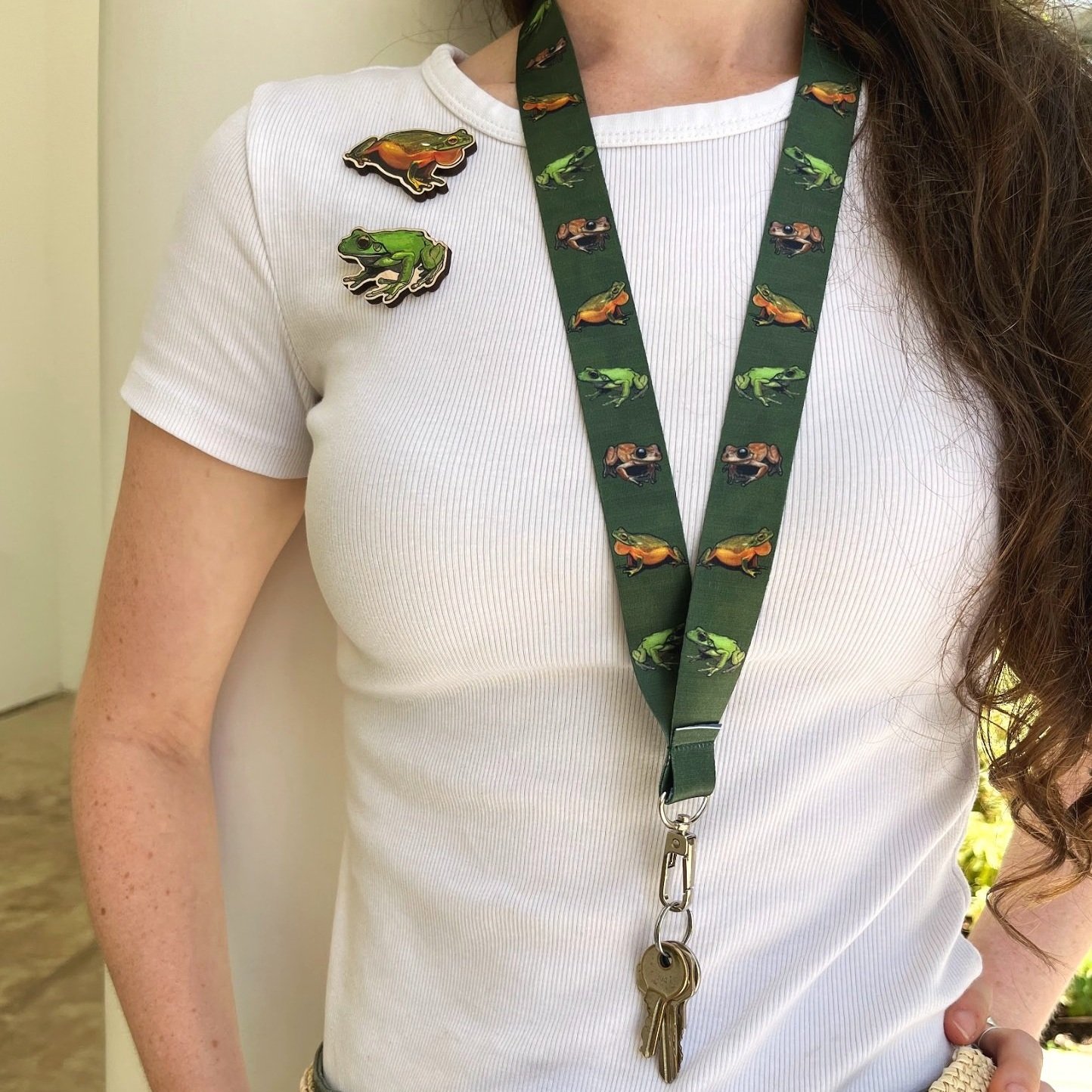
Length: 86cm end-to-end
Width: 2.5cm
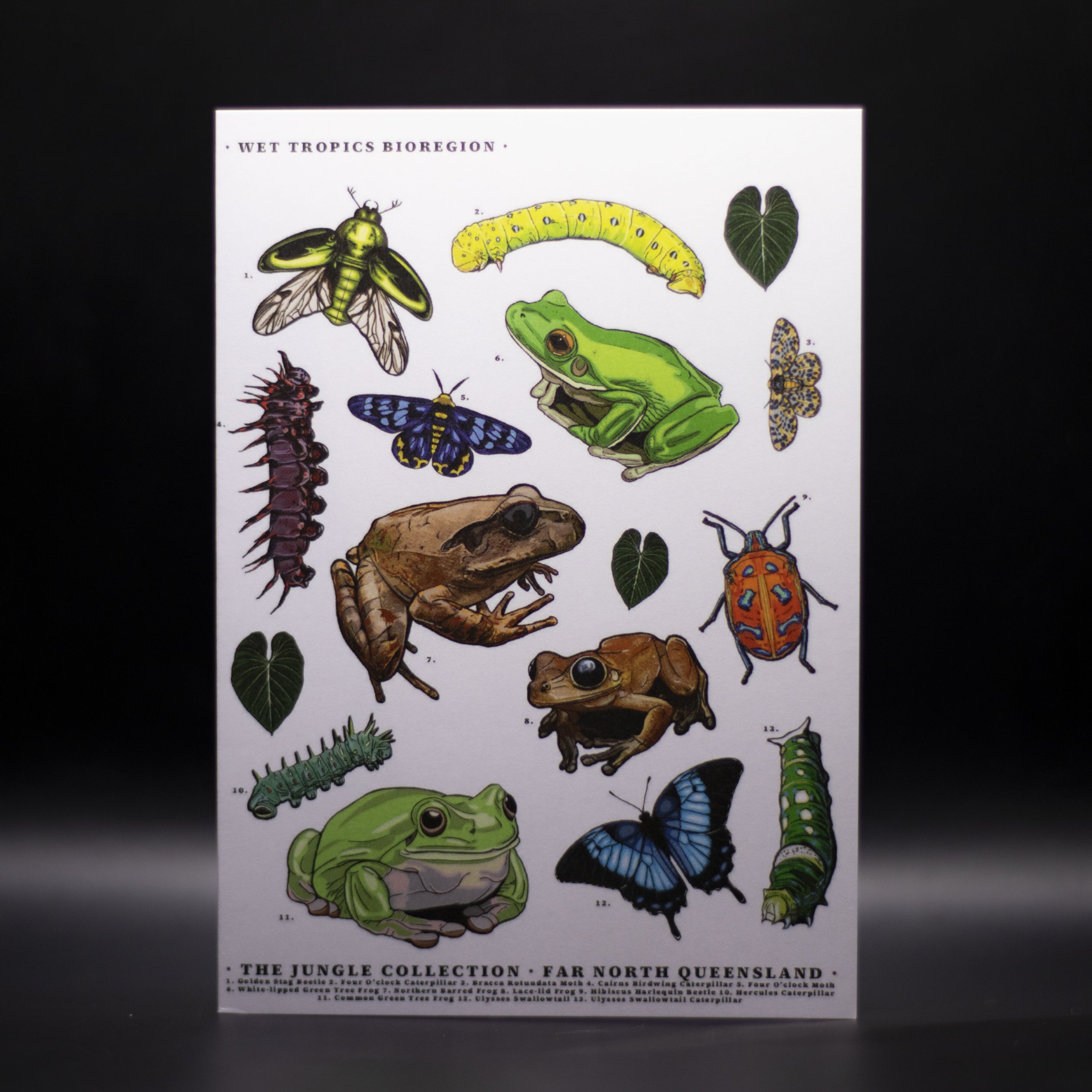
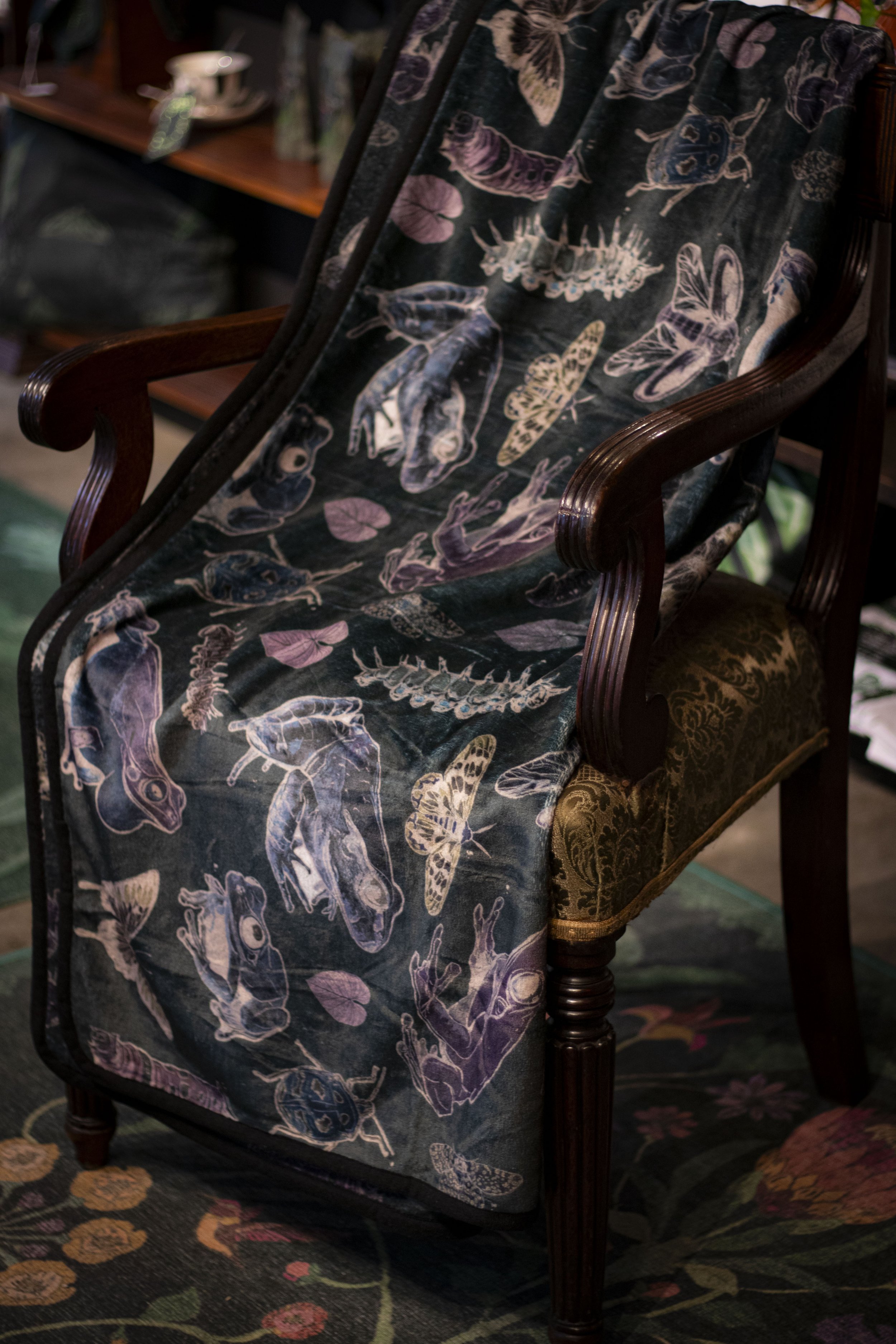
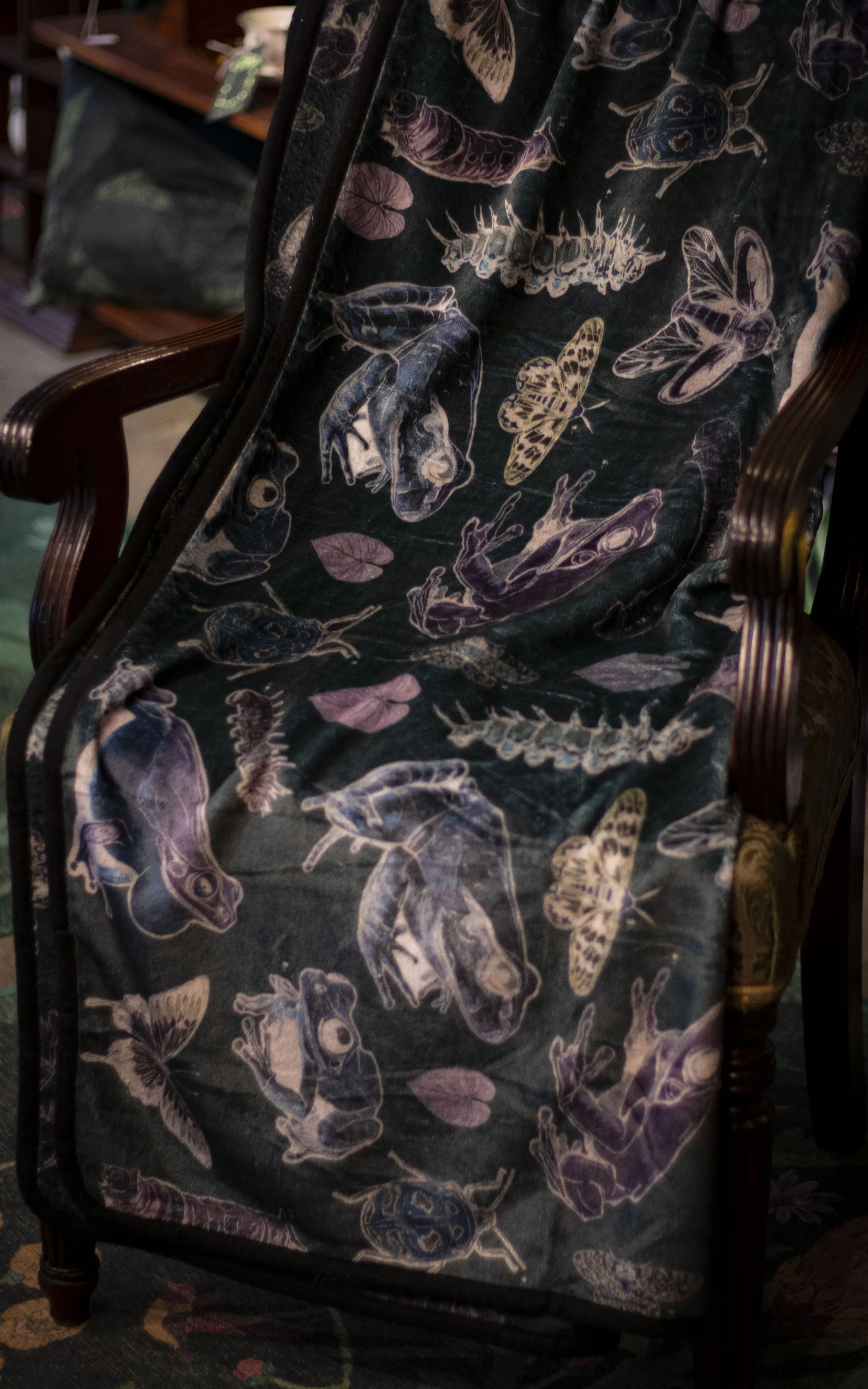
Design: featuring the White-lipped Green Tree Frog, Lace-lid Tree Frog, and Dainty Tree Frog.
Hardware: Stainless-steel U-shaped clasp.
Material: Machine washable, synthetic fibre.
-
The White-lipped Green Tree Frog (Litoria infrafrenata) is Australia’s largest tree frog, reaching 11–14 cm in length. Its bright green body is complemented by an off-white belly and a distinctive white stripe along the lower lip that extends to the shoulder. In breeding males, this stripe (and sometimes parts of the hind limbs) takes on a faint salmon-pink hue.
An arboreal species, it inhabits tropical habitats, favouring rainforests, monsoon woodlands, cultivated areas, and urban gardens across north-eastern Queensland. It also occurs in New Guinea and nearby islands. Nocturnal and agile, it spends most of its life in trees, descending only to breed. Its call is a distinctive, loud “wark, wark” reminiscent of a small dog barking, changing to a meow-like sound when distressed.
The White-lipped Green Tree Frog feeds on insects and other small invertebrates. Breeding typically follows rain in spring and summer, when males call from elevated perches near still water. Females lay large clumps of eggs in water, where tadpoles develop before metamorphosing. This hardy species can live for over 10 years in the wild and is listed as Least Concern.
-
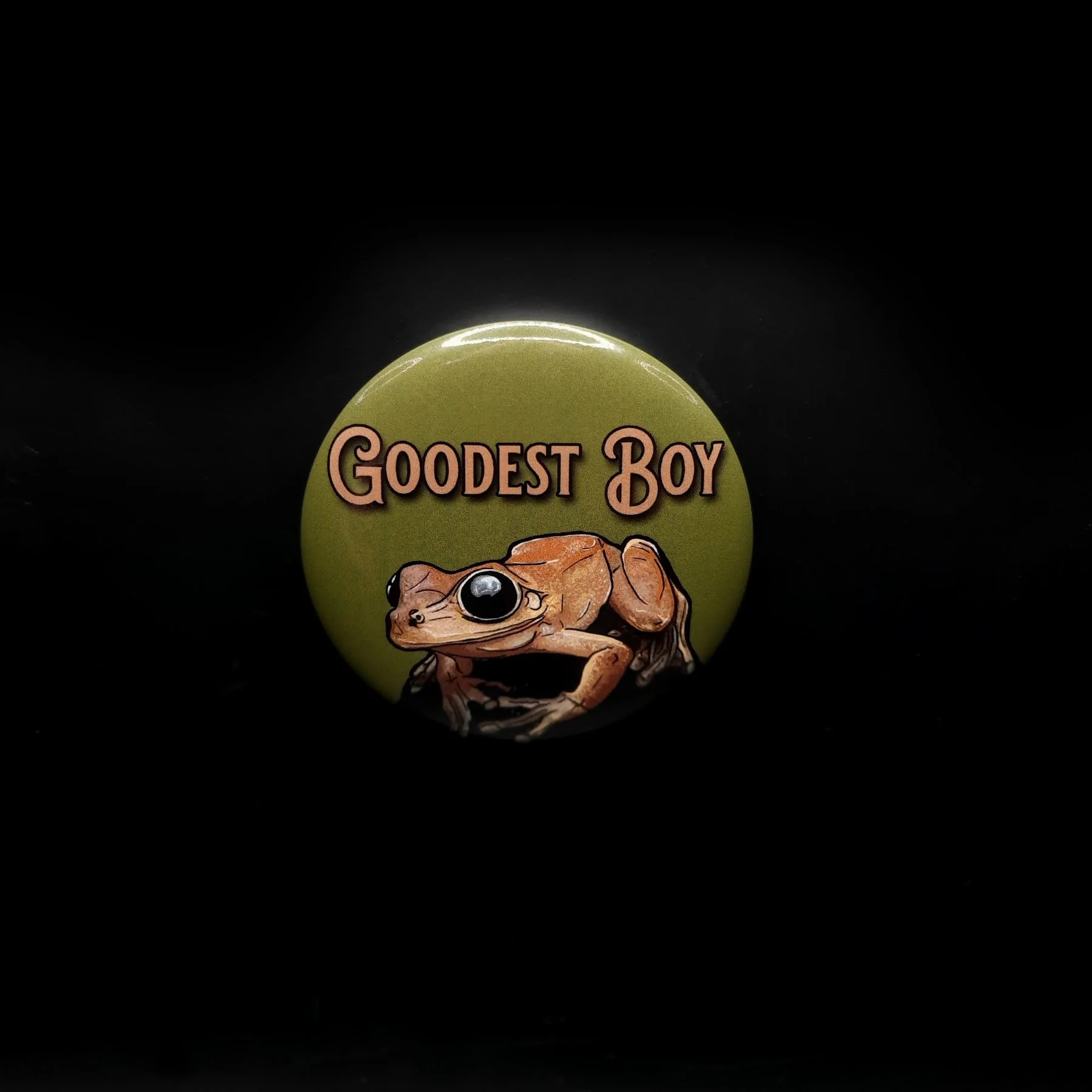
The Lace-lid Tree Frog (Ranoidea dayi) is a small, elusive tree frog found only in the wet tropics of north-eastern Queensland. Growing to about 50 mm in length, it is coloured rich brown to orange-brown with scattered cream or lichen-like spots. Its belly is cream-white and reticulated, while its arms and legs display faint barring and a subtle fringe. The frog’s most striking feature is its lower eyelid, marked with a lace-like pattern of veins and dots that inspired its common name.
This nocturnal species inhabits fast-flowing creeks in montane rainforest and, occasionally, slower waterways shaded by dense vegetation. Breeding occurs from spring through summer, with peak activity between October and April. Males call from low foliage or rocks beside streams, producing a drawn-out “eeeeeeee” when in chorus or short “ee” calls when alone.
Females attach clumps of up to 100 large, unpigmented eggs to submerged objects. The Lace-lid Tree Frog is listed as Endangered under the IUCN Red List and Vulnerable under Australian conservation laws.
-
The Dainty Tree Frog (Litoria gracilenta) is a petite and charming tree frog, growing to about 4.5 cm in length. Its back is lime green, fading to a bright yellow belly, with bold yellow sides and matching yellow lips. A pale yellow or green stripe extends from the nose across the eye, while the thighs display maroon or purple-brown hues. Its burnt-orange eyes stand out, and the fingers are roughly three-quarters webbed, while the toes are fully webbed—both bearing large discs.
This arboreal frog inhabits eastern Queensland down into north-eastern New South Wales and is often seen after rain in forested wetlands, woodland, and gardens. Though primarily rainforest-associated, it frequently appears in suburban areas and is sometimes inadvertently transported on fruit shipments.
Males form noisy choruses in spring and summer after rain, emitting a long, growl-like call. Eggs are laid in clear jelly masses attached to vegetation near water, and tadpoles develop over about 14 weeks. A resilient species, the Dainty Tree Frog is classified as Least Concern.
-
- Keep in a cool, dry location.
- Handle with care.
- Do not get wet.
-
- Cairns Local: Designed and assembled in Cairns by artist Jenna Minchin: Owner of The Jungle Collection, Cairns local of 13 years, established artist and regionally recognised entrepreneur.
- Support Small: We operate from our retail store in the heart of Cairns city, in Oceana Walk Arcade (since Sept 2024). To keep our focus small & sustainable, we only hold small quantities of stock, choosing to create small batches of products to respond to demand.
- Sustainably Focused: To honour the Rainforest and the wildlife within it, we strive to use ethical, sustainable and responsibly sourced materials for our products (when possible, to do so). This includes responsibly sourced wood, recycled acrylic, reclaimed steel and recycled papers. More information on this can be found in our policy page.